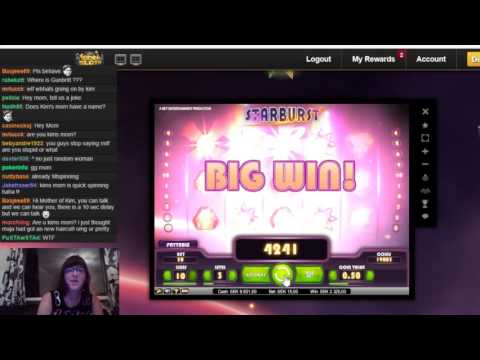
The game Starburst Slot has maintained the number-one place among online slot games for more than ten years, largely because its bonus trigger doesn’t adhere to the scatter-symbol template gamblers have grown accustomed to. Instead of arranging three matching icons that trigger a free-spin round, NetEnt’s creation uses its star-shaped wild to activate an expanding re-spin sequence. Each time the wild lands, it functions as a scatter that provides instant replay value rather than a separate bonus screen. Grasping exactly how that unusual trigger fires, stacks, and rewards is crucial for everyone who aims to improve their session enjoyment and see the game’s full potential reveal across the glowing jewel-toned grid.
The Enduring Allure of Starburst’s Distinctive Trigger Mechanic
A dozen years after its initial release, Starburst continues to rule casino lobbies not because it has the richest bonus round or the largest jackpot, but because its core mechanic is uncomplicated, fair and endlessly repeatable. The expanding wild re-spin system offers the player a taste of a feature event roughly every couple of dozen spins under normal variance, and the low barrier to triggering it takes away the psychological weight of chasing an elusive scatter. That design philosophy converted what could have been a basic gem-themed slot into a reference that newer games still find it hard to exceed in terms of pure engagement per minute.
The lack of a traditional scatter also renders the game exceptionally easy to grasp for new players. There is no requirement to study a separate bonus rules page or remember which symbols unlock what. One symbol performs everything: stands in, enlarges, grants a respin and can chain into up to two more. That simplicity, coupled with the constant visual and audio feedback, makes Starburst a masterclass in how to build a slot around a one, perfectly tuned mechanic. As long as players crave instant action and transparent reward structures, the star-shaped wild will keep to serve as the most effective scatter substitute in online slot history.
Proven Methods with Starburst’s Scatter-Like Mechanic
Because the wild re-spin feature is the only path to Starburst’s biggest payouts, smart play revolves around managing the bankroll so that enough spins pass by to encounter multiple wild activations. Going after quick wins with huge bet jumps is rarely effective in a low-volatility title where the feature does not trigger more often at higher stakes. Instead, experienced players adopt a consistent bet size that can withstand the natural ebb and flow of small wins between wild appearances. The goal is to have at least 150 to 200 spins ready at the chosen stake level, which gives the session enough time for the frequency rhythm to develop.

Bankroll Management and Win Ceiling Awareness
Starburst’s 500x max win cap should direct bet-size decisions. If a player’s session goal is to hit a specific cash target, they can reverse-engineer that number: a stake of 0.10 can yield up to 50, while a 2 stake can return up to 1,000. Setting a practical win goal and knowing when to stop after hitting a strong re-spin sequence prevents the common mistake of giving back profits during the lower-payout base game that follows. Many seasoned users will lock in a portion of any win exceeding 50x the stake and only continue playing with the original session budget, which protects the upside while keeping the entertainment going.
Timing and pattern systems have no influence over the random number generator, but paying attention to the session’s behaviour can still shape sensible decisions. If the reels have gone 60 to 80 spins without a wild landing, the instinct to raise the bet out of frustration is counterproductive. The game does not owe a feature and volatility does not work on a compensation schedule. Better to keep the bet steady and let the mathematical design do its work. The wild’s appearance rate is hard-coded into the software, so patience and disciplined staking are the only reliable levers a player can pull.
The Fundamental Structure: Spinning Columns, Payout Lines and the Win-Both-Ways Engine
Starburst runs on a classic five-reel, three-row grid that remains constant and remains timeless. That configuration is supported by ten set paylines that run across across the screen, but the real difference rests in how those lines evaluate winning combinations. Every payline awards left to right and right to left, which effectively increases twofold the number of opportunities a player obtains from a single spin. This two-directional mechanic is rare even today among modern slots and constitutes the mathematical backbone that provides the game its surprisingly gentle but persistent hit rhythm.
Because wins can begin from either side of the reels, a single high-value symbol set can produce multiple payouts even when the series does not span the entire grid. For example, three lucky sevens on the leftmost line payout, and if another set of matching sevens appears on the rightmost three positions of the same payline, that too is considered as a separate win. The dual-direction layout works particularly well with the wild’s expanding behaviour, because when a star extends across the central reels, it often joins with symbols on both edges of the screen concurrently, creating cascades of rewards that seem far larger than the base wager.
Symbol Ranking and Paytable Structure
The paytable contains eight regular symbols split evenly between colourful gems and traditional bar-and-seven icons. The low-tier gems are a yellow citrine, an orange topaz, a green emerald, a blue sapphire and a purple amethyst, each providing moderate but frequent returns. High-paying symbols transition to a retro fruit-machine design with a glowing red BAR, a gleaming gold BAR and the iconic red lucky seven. The seven awards the most, rewarding up to 250 coins for a full five-of-a-kind on a single payline. Because the game rewards both ways, filling an entire line with sevens can activate that payout twice, pushing the effective prize substantially higher on a single spin.
The Sensory Layer: How Audio and Visuals Enhance the Scatter-Like Moment
NetEnt’s art direction for Starburst pairs a deep cosmos backdrop with arcade-style neon arcs, and that aesthetic achieves more than visual appeal — it directly trains the player to experience the wild trigger as a special event. The backdrop sparkles with distant stars and subtle blue-to-purple gradients, but the grid itself remains clean and uncluttered. Every symbol appears to float slightly above the reels, and when a win occurs, the winning payline flashes with a crisp metallic shimmer. This restrained base-game palette creates the explosion of light when the wild star lands feel genuinely explosive by contrast.
The audio design adheres to the same principle. Spins are set to a retro-futuristic synthesizer loop that repeats gently without becoming repetitive or intrusive. Smaller wins produce short, sparkling chimes, while bigger wins add deeper bass notes. When the wild lands, the music rises slightly but it is the sudden whoosh and the bright, rising chime sequence that signal the player something significant is happening even before the reel expansion completes. That audio spike echoes the psychological jolt of a scatter trigger in other slots — the brain detects the sound and immediately connects it with a positive outcome, which boosts the excitement loop without any reading or rule-checking required.
Wagering Limits, Coin Values and Winning Formulas
Starburst caters to a wide range of players through a versatile coin-and-level wagering system. The fundamental coin amount can generally be adjusted from 0.01 to 1.00, and there are ten set wagering tiers that multiply the coin value. With ten paylines always active, the overall wager per round varies from a minimal 0.10 up to a highest of 100, though exact extremes differ slightly based on the casino integration. This range implies the game accommodates both the recreational user who likes to bet for pennies and the more committed enthusiast who prefers higher stakes to chase the 500x peak. All paytable values are displayed in coins, so the cash reward adapts naturally with the selected stake tier.
Because the paylines are fixed, the player is not required to make a choice about how many lines to activate. That lessens confusion and maintains attention on bet-level selection. A spin at level one with a 0.01 coin value totals 0.10 and awards even the smallest gem wins back at a few cents, while a highest stake spin at level ten with a 1.00 coin value costs 100 and can produce the full 50,000-coin prize when everything matches up. The fixed-line model also assures that no winning combination is ever missed due to an unactivated line, which is crucial when the wild expansion can generate payouts across several lines simultaneously.
How Prizes Transfer into Actual Cash Prizes
Every symbol’s paytable entry shows a coin amount for three-, four- and five-of-a-kind hits. On a single direction, five purple gems might award 25 coins, while five red sevens give 250 coins. In the game’s two-directional system, getting five sevens from left to right and another five from right to left on the same payline would grant 250 plus 250, summing to 500 coins. Increase that by the bet level and coin value to calculate en.wikipedia.org the actual cash. At highest configurations, a 500-coin win becomes 500 credits, which equals a 5x return on the 100 stake. When multiple paylines and wild-expanded reels merge, the total prize can rapidly near the 500x bet ceiling.
Step-by-Step Analysis of the Expanding Wild and Re-Spin Feature
The time a star appears on reel two, three or four, the game halts the standard spin evaluation and activates a distinct feature state. The wild symbol halts, a brief animation extends the star to fill the whole reel from top to bottom, and the reel borders shine white-hot. Once the expansion animation completes, the game recalculates all paylines with the new full-reel wild in place and pays out any resulting wins. After the win amount is added, the screen freezes the expanded reel and the rest of the reels spin again free of charge. This sequence appears simple but conceals layers of decision-free, fast-flowing action that keeps the pace electric.
- The wild must appear on reels two, three or four; reels one and five never feature the feature symbol.
- Upon landing, the wild grows vertically to occupy the entire reel, spanning all three positions.
- Wins are calculated and awarded instantly after the expansion, using both the left-to-right and right-to-left payline directions.
- The expanded reel freezes in place, and a single re-spin is awarded with the locked wild still active.
- If a new wild lands on any other qualifying central reel during the re-spin, it expands, locks, and triggers another re-spin — up to a maximum of three in succession.
- When no new wilds show up or the third re-spin ends, the feature stops and all reels return to normal for the next paid spin.
During a sequence where two or all three central reels become fully wild, the mathematical advantage shifts dramatically. A grid with reels two, three and four completely wild essentially guarantees wins on almost every spin because the locked wilds connect the left-side symbols to the right-side ones across multiple paylines. This is the moment that produces Starburst’s most impressive payout clusters, often collecting several moderate wins into a single substantial balance boost. The fact that all re-spins are free keeps the bet size constant throughout the feature, which means the player’s bankroll does not decrease during what is statistically the highest-value part of the game.
How Starburst’s Scatterless Design Measures Up with Traditional Scatter-Triggered Slots
In a typical scatter-driven slot, players spend spins looking for three or more bonus symbols that often land anywhere on the screen. Those scatters can be frustratingly elusive, sometimes contributing to long stretches of inert base-game action before the bonus round finally activates. Starburst does away with that waiting room entirely by integrating its only special mechanic directly into the wild symbol and having a single appearance sufficient to launch the re-spin sequence. The psychological difference is massive: instead of needing a rare combination of scatters, the player needs just one wild on any of the three eligible reels. That accessibility shapes the entire pace and feel of the game.
Re-Spin Sequences Versus Free-Spin Rounds
Traditional free-spin features typically move the player to a new screen, modify the reel set, introduce multipliers or sticky wilds, and grant a fixed number of spins that can re-trigger. Starburst’s re-spins happen inline, never take the player from the base grid, and last only one spin at a time unless chained. There is no multiplier, no special symbol transformation and no accumulating meter. What the re-spin system forgoes in feature complexity it acquires in raw, immediate replayability. The player never has to wait through a long bonus sequence to know the outcome; each re-spin resolves in a few seconds and either ends or continues, generating a staccato rhythm of hope and resolution that many find more addictive than sprawling free-spin rounds.
Slots that lean heavily on scatter symbols also tend to spike their volatility around the bonus game, providing massive wins during free spins but very little in between. Starburst smooths out that curve. Since the wild can appear at any point and the re-spins integrate seamlessly with the base-game paytable, the slot produces a steadier stream of moderate wins punctuated by occasional hot streaks. This makes it an ideal title for players who want the thrill of a feature trigger without the frustration of chasing a three-scatter combination that, statistically, might only land once every 150 or 200 spins.
Výplatní poměr, Kolísavost a Frekvence výher – The Mathematical Personality
Starburst comes with a theoretical návratnost hráči percentage of 96.09%, hodnota, která řadí ji jednoznačně do průměrného až solidního pásma u online automatů. Tento údaj odráží milionů testovacích spinů a znamená, že for every 100 units wagered, automat is programmed vyplatit 96.09 za extrémně dlouhé období. While the RTP alone negarantuje krátkodobé výsledky, je a reliable indicator, že hra nevysává konto as aggressively as high-house-edge titles do. Údaj 96.09 % se také dobře doplňuje s frekvencí výher pohybující se kolem 22% až 25%, což znamená, že zhruba jedno z každých čtyř až pěti zatočení produces some kind of win, i když most of those bude malá.
Nízká volatilita s potenciálem středních nárazů
Volatility se nachází in the low-to-medium band, což je záměrnou designovou volbu, that makes automat příjemná na hraní na dlouhé herní bloky i při skromným bankrollem. Výhry jsou časté, ale obvykle jsou malé až střední, rarely exceeding 20 a 50 times the stake outside of funkce divokých respinů. Profil nízké volatility způsobuje, že players nezažijí dlouhé suché období mrtvých spinů typických pro vysoce volatilní jackpotové automaty. Naopak, hra udržuje konto v plusu, s tím, že napětí se koncentruje v okamžicích, když se rozšiřující wild zastaví and the re-spins stack. This structure zvýhodňuje trpělivost a pravidelné sázení rather than aggressive chasing.
Nejvyšší možná výhra je omezena na 500 times the total bet per spin, což pro a low-volatility game je velmi velkorysé. Pro dosažení tohoto maxima, a player needs a sequence where všechny tři prostřední válce se stanou plně wild while vysoce výherní symboly například červená sedmička se zarovnají along the active paylines in both directions. Přestože strop 500x nepředstavuje progresivní jackpot, it represents čistý a reálný cíl that aligns with the game’s transparent mathematical model. That clarity a dosažitelnost are part of why Starburst remains a favourite for players who value steady entertainment namísto cen měnících život ve stylu loterie.
The Starburst Wild: A Symbol That Functions as a Scatter-Like Trigger
Starburst does not contain a conventional scatter symbol. detailed guide There is no icon requiring minimum quantities to land to activate a separate free-spin round or a bonus selection game. The entire feature system is built around a multi-coloured star that functions as both a substitute wild and the only bonus activator. When that star appears, it does the job of a scatter in the manner that it awards something extra beyond a regular line win — namely an expanding reel and a re-spin. This design decision was intentional: NetEnt engineered the game so that the bonus trigger is woven directly into the base-game reels rather than concealed behind a rare collectible symbol.
The wild star only lands on reels two, three and four. It substitutes for every other symbol, which means it assists in completing payline combinations that would otherwise fall one icon short. However, its true purpose becomes clear the instant it occupies any position on those central reels. The star instantly expands to cover the entire reel vertically, turning all three positions into wilds, and that reel freezes while a complementary re-spin is granted. If an further wild lands on one of the other two central reels during the re-spin, the process repeats itself, extending the new wild, locking that reel and triggering yet another re-spin. Up to three successive re-spins can occur if the player manages to land a wild on all three centre columns, leading to a fully wild-locked middle section of the grid.
Why the Community Often Calls It a Scatter Mechanic
A lot of players and even casino reviewers casually refer to the Starburst wild as a scatter because the experience seems like one. In conventional scatter-led slots, the rush comes from the moment matching scatter symbols land and the screen flashes before moving into a bonus round. Starburst achieves that same jolt of excitement without a screen change: the wild appears, the reel expands in a burst of light, and the re-spin immediately follows. The feature does not need three symbols anywhere on the reels; a single wild is adequate to set off the sequence. That low threshold to entry and the immediate feedback loop are precisely what players seek from scatter systems, even though the underlying mechanics are entirely wild-driven.